Klinik yapay zekâda belirsizliği göstermek
Ne kadar emin olduğunu söylemeyen bir tahmin hem aşırı güvene hem de göz ardı edilmeye yol açar. Kalibrasyon, vaka düzeyinde belirsizlik ve yanıt vermekten kaçınabilme neden klinik yapay zekânın parçası olmalı?
Bu yazı şu anda yalnızca İngilizce olarak mevcuttur. İncelenmiş Türkçe çevirisi daha sonra eklenecektir.
Clinicians work with uncertainty all the time. A good clinician says “probably”, “I’d want to rule out”, and “let’s see how it looks in two weeks”. Much clinical AI, by contrast, speaks in single numbers and confident sentences. That mismatch is a design problem, and a safety problem.
Two kinds of uncertainty
It helps to separate two ideas.
Calibration asks whether a model’s probabilities mean what they say. If a well-calibrated model assigns a 30% risk to a group of patients, about 30% of them should have the outcome. Discrimination, meaning how well a model ranks patients, is a different property. A model can rank well and still be badly calibrated, systematically over- or under-stating risk. Guo and colleagues showed in 2017 that modern neural networks, despite their accuracy, are often poorly calibrated and overconfident, and that simple post-hoc methods can improve this. TRIPOD+AI asks prediction-model studies to report calibration for this reason.
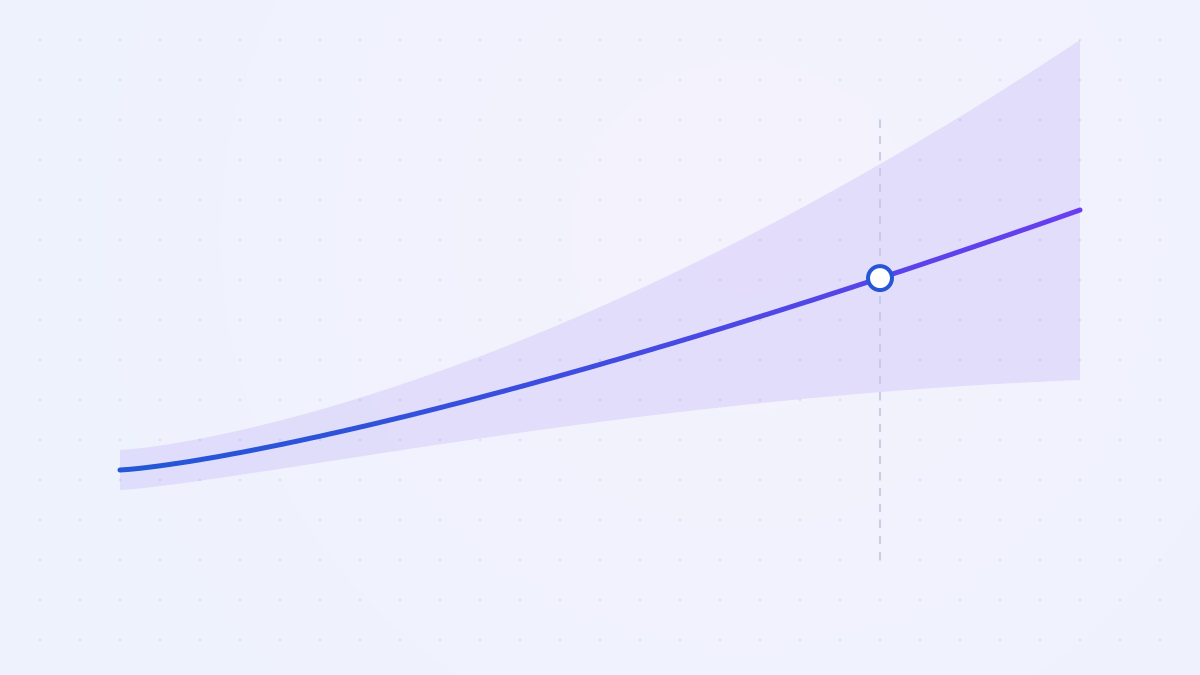
Case-level uncertainty asks how sure the model is about this patient. Two patients with the same predicted risk can differ a lot in how much the model actually knows about them. One may look like thousands of patients in the training data; the other may be unusual in ways the model has rarely seen.
Kompa, Snoek, and Beam argued that uncertainty for individual predictions is often neglected, although estimates could support more principled decisions and let models abstain, automatically or semi-automatically, when uncertainty is high.
Why abstention is a feature
A model that can say “I don’t know” is more useful than one that always answers. Abstention lets the system route difficult cases to people, and lets people trust confident outputs more, because confidence then carries information.
In practice, abstention needs to be designed with the clinical team:
- Where is the threshold? It is a clinical and operational choice, not a purely technical one. It trades coverage against reliability.
- What happens to abstained cases? They should go into a normal workflow, not a dead end.
- How often does it abstain, and for whom? If abstention clusters in a particular patient group, that may reveal a data gap worth fixing.
Showing uncertainty without causing confusion
Displaying uncertainty badly can be worse than not displaying it. A few principles we follow:
- Use words and numbers together. “High priority (p = 0.78)” reads better than either alone.
- Show drivers, not just scores. Explanations such as feature contributions help clinicians judge whether a prediction makes sense for this patient. In Med-AId, SHAP values show what drives each prediction, patient by patient.
- Flag when the input is unusual. “This patient’s profile is outside the range the model was validated on” is one of the most useful sentences a clinical model can say.
- In generative tools, mark uncertain spans. A drafted dose that the speech model heard poorly should look different from one it heard clearly.
The automation-bias literature supports this approach. Goddard and colleagues list updated confidence levels shown alongside decision-support output among the design factors that can reduce over-reliance.
Uncertainty in multi-perspective review
In multidisciplinary review, uncertainty also takes the form of disagreement. When perspectives prepared for different disciplines diverge, that divergence is information. Merging it into a single confident summary hides exactly what the board most needs to discuss. We keep it visible.
What to ask of a clinical model
- Is calibration reported, and checked on local data?
- Does the model provide case-level uncertainty?
- Can it abstain, and what happens when it does?
- Does it say when an input is outside its validated range?
- Are explanations available for individual predictions?
A prediction is a claim. Uncertainty is the part of the claim that tells you how much weight it can bear. Leaving it out doesn’t make an answer more useful; it just makes it harder to use safely.
Kaynaklar
- Kompa B, Snoek J, Beam AL. Second opinion needed: communicating uncertainty in medical machine learning. NPJ Digit Med. 2021;4(1):4. doi.org/10.1038/s41746-020-00367-3
- Guo C, Pleiss G, Sun Y, Weinberger KQ. On Calibration of Modern Neural Networks. Proceedings of the 34th International Conference on Machine Learning (ICML), PMLR 70:1321–1330, 2017. proceedings.mlr.press/v70/guo17a.html
- Collins GS, Moons KGM, Dhiman P, et al. TRIPOD+AI statement: updated guidance for reporting clinical prediction models that use regression or machine learning methods. BMJ. 2024;385:e078378. doi.org/10.1136/bmj-2023-078378
- Goddard K, Roudsari A, Wyatt JC. Automation bias: a systematic review of frequency, effect mediators, and mitigators. J Am Med Inform Assoc. 2012;19(1):121–127. doi.org/10.1136/amiajnl-2011-000089