Tümör konseyi hazırlığında yapay zekâ
Multidisipliner toplantılar hastaların nasıl değerlendirildiğini ve tedavi edildiğini değiştirir ve çok fazla uzman zamanı alır. Çok ajanlı yapay zekânın hazırlıkta nerede yardımcı olabileceği ve nerede dışarıda kalması gerektiği.
Bu yazı şu anda yalnızca İngilizce olarak mevcuttur. İncelenmiş Türkçe çevirisi daha sonra eklenecektir.
A multidisciplinary team (MDT) meeting brings radiologists, pathologists, surgeons, oncologists, nurses, and others into one room or one video call to agree a plan for each patient. In cancer care these meetings, often called tumour boards, are routine in many health systems.
They are also expensive in the scarcest currency healthcare has: specialist time. A systematic review of MDT meetings in oncology noted the significant investment of time and money they require. It also found that they matter. Across 27 studies, between 4% and 45% of patients discussed at MDT meetings had a change in diagnostic reports afterwards, and patients discussed were more likely to receive more accurate and complete pre-operative staging. Evidence for improved survival was limited, and study quality was affected by selection bias.
So there are two problems at once: MDT review changes decisions, and it is hard to do well at scale. That makes preparation, the work before the meeting, a sensible place to look for help.
Where the time actually goes
Much of an MDT’s effort goes into assembling and reconciling information: finding the latest imaging report, checking whether a biomarker result has come back, summarising treatment history, noticing that a staging scan is out of date. When preparation is incomplete, cases are deferred, discussion is spent establishing facts, and specialist attention is used for tasks that don’t need specialist judgement.
What multi-agent support can offer
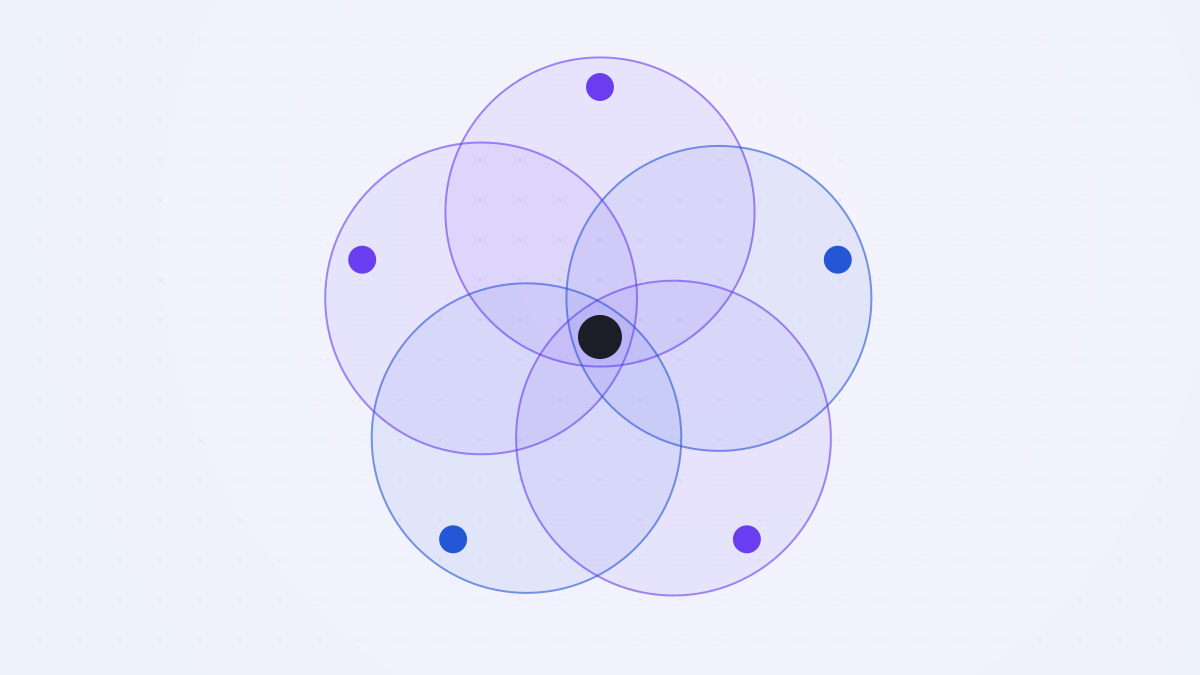
“Multi-agent” describes a system where several AI components work on a task from different angles. For MDT preparation, the natural split mirrors the room itself: one agent prepares the considerations a radiologist would raise, another those of a pathologist, another those of a surgeon, and so on.
Used well, this structure does three useful things:
- It organises evidence by discipline. Each perspective cites the documents it relies on, so specialists can go straight to what matters to them.
- It shows agreement and divergence. Where perspectives align, that is visible. Where they differ, for example on the order of treatments, the difference is kept, not averaged away.
- It lists what is missing. A pending biomarker, an old scan, or an unrecorded performance status can be flagged before the meeting instead of being discovered during it.
What it must not do
The design risks are as clear as the benefits.
It must not vote. A system that combines perspectives into a single recommendation invites anchoring. The Goddard review of automation bias found that giving information rather than a recommendation was among the mitigations for over-reliance. The board decides; the software prepares.
It must not blur preparation and decision. Agent output should be clearly labelled as preparation material, and the decision record should be written by clinicians. If they later look similar, the audit trail should make the difference obvious.
It must not hide its sources. Every statement should reference the document it relies on. A perspective without citations is an opinion from nowhere.
It must not pretend to be complete. The perspectives an AI prepares are only as good as the records it can see. The absence of a concern is not evidence that there is none.
Evaluating it honestly
Decision support for MDTs is an intervention in a complex human process. Before claiming benefit, it needs the kind of staged evaluation described in the DECIDE-AI guideline: small-scale, supervised use that examines actual performance, safety, and human factors, including how clinicians use (and misuse) the outputs.
Useful early measures include preparation time per case, the rate of cases deferred for missing information, the completeness of information at discussion, and clinicians’ assessment of the accuracy of prepared perspectives. Whether decisions or outcomes change is a later and harder question, and should be treated as one.
The shape of good support
The best MDT preparation is invisible in the meeting: the facts are there, the gaps are known, and the time is spent on judgement. That is the goal. The measure of success is not how much the software says, but how much specialist time goes to the decisions only specialists can make.
AId Centric is designing a multidisciplinary board platform (working title) around these principles. This article describes our approach and published evidence; it does not report results from our own product.
Kaynaklar
- Pillay B, Wootten AC, Crowe H, et al. The impact of multidisciplinary team meetings on patient assessment, management and outcomes in oncology settings: A systematic review of the literature. Cancer Treat Rev. 2016;42:56–72. doi.org/10.1016/j.ctrv.2015.11.007
- Goddard K, Roudsari A, Wyatt JC. Automation bias: a systematic review of frequency, effect mediators, and mitigators. J Am Med Inform Assoc. 2012;19(1):121–127. doi.org/10.1136/amiajnl-2011-000089
- Vasey B, Nagendran M, Campbell B, et al. Reporting guideline for the early-stage clinical evaluation of decision support systems driven by artificial intelligence: DECIDE-AI. Nat Med. 2022;28(5):924–933. doi.org/10.1038/s41591-022-01772-9