Sözlü aile öyküsünden soyağacına
Bir yazılımın, hastanın sözlü olarak anlattığı aile öyküsünü genetik ekibinin güvenebileceği ve düzeltebileceği standart bir soyağacına dönüştürmesi için gerekenler.
Bu yazı şu anda yalnızca İngilizce olarak mevcuttur. İncelenmiş Türkçe çevirisi daha sonra eklenecektir.
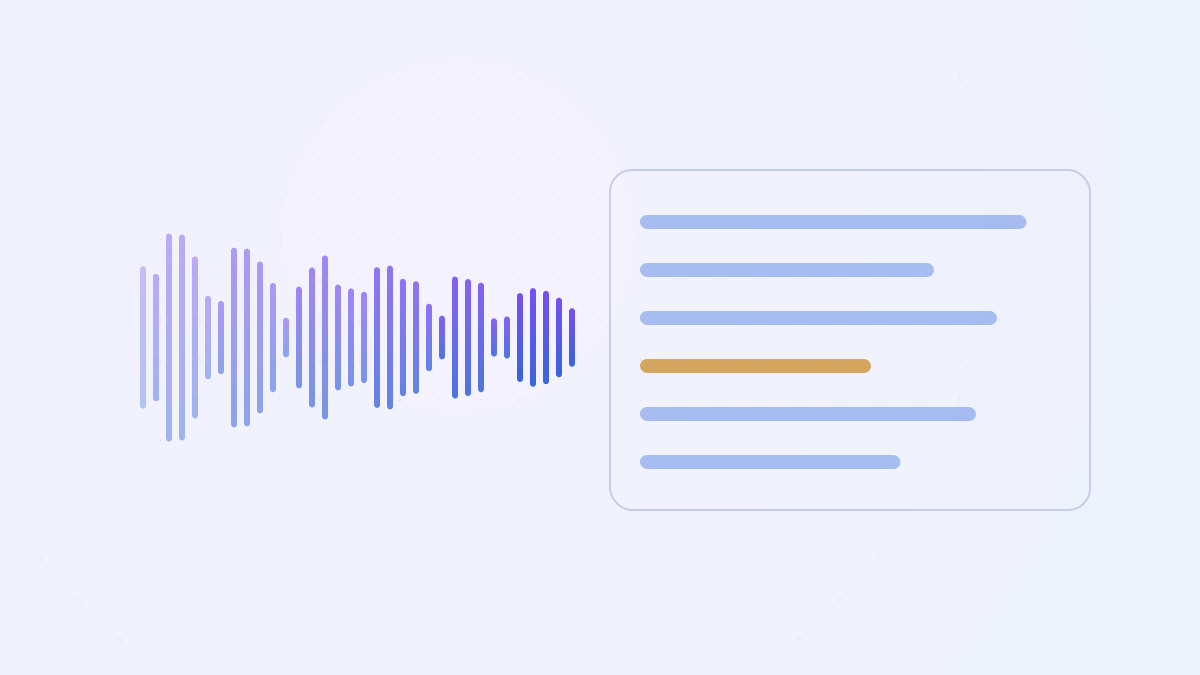
People rarely tell their family history in the order a pedigree is drawn. They start with whoever comes to mind, often the relative whose illness frightened them most, and move sideways, backwards, and forwards: “My mum had breast cancer in her forties. Her sister too, actually. She died young. Dad’s side is fine, I think. Oh, and my brother had a scare last year.”
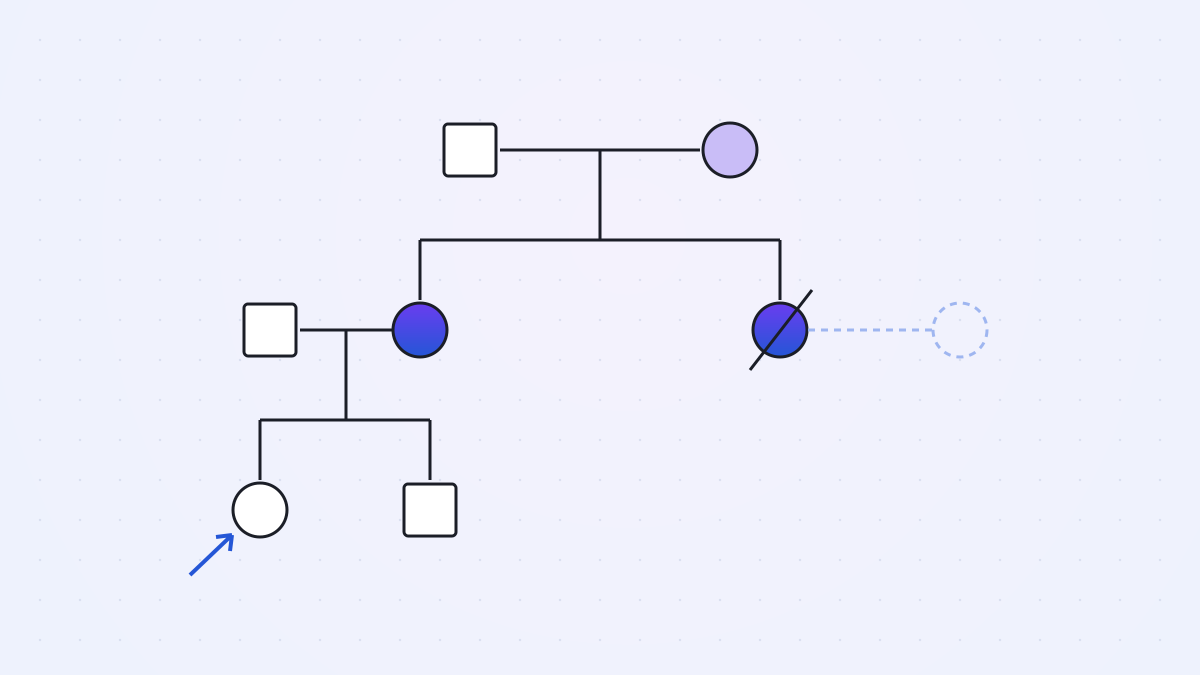
A genetic counsellor turns that into a pedigree: a diagram with standard symbols for each person, lines for relationships, and notes for conditions and ages. It is skilled, time-consuming work. It is also exactly the kind of structuring task where software can help, provided it respects how much can go wrong.
Why pedigrees follow a standard
Pedigrees work because they are drawn the same way everywhere. The National Society of Genetic Counselors (NSGC) first proposed standardised pedigree nomenclature in 1995 and updated it in 2008. A 2022 revision focused on sex and gender inclusivity, clarifying how to record sex assigned at birth and gender identity separately, while noting that most of the established nomenclature remains relevant.
For a software tool, the standard is not a style guide to apply at the end. It is the data model. Every person, relationship, and annotation should map to something a genetics professional would recognise, so that the result can be read, checked, and corrected without translation.
What “structured” actually requires
Turning speech into a pedigree involves several separate steps, and each one can fail on its own.
Recognising people and relationships. “My mum’s sister” is a maternal aunt. “My sister’s boy” is a nephew. Relationship terms are compositional, and the tool has to resolve them relative to the person being seen (the proband).
Resolving ambiguity. “My aunt” could be on either side, and could be a relative by birth or by marriage. “My brother” could be a full or a half sibling. A tool that silently picks the most likely option will be wrong some of the time, and wrong in ways that change risk interpretation. The right behaviour is to ask: “Is this aunt your mother’s sister or your father’s sister?”
Capturing conditions and ages. “Breast cancer in her forties” gives a condition and an approximate age at diagnosis. Both matter, and the approximation should be kept as an approximation, not rounded into false precision.
Recording what isn’t known. Patients often don’t know. “Dad’s side is fine, I think” is different from a confirmed negative history. A structured pedigree should be able to show “unknown” and “not asked” as well as “unaffected”.
Handling sex and gender respectfully. Following the 2022 NSGC guidance, sex assigned at birth and gender identity should be separate fields, and the tool should never infer either from a name or a pronoun.
Designing for correction
However good the speech recognition and language understanding, the output is a draft. That shapes the design:
- Every person shows where they came from. Selecting a relative in the diagram should show the phrase that introduced them. That makes checking quick and errors obvious.
- Unconfirmed relationships look unconfirmed. A relationship inferred but not yet confirmed should be drawn differently, for example with a dashed line, until someone confirms it.
- Edits are easy and structural. Moving a relative to the other side of the family should be one action, not a redraw.
- Interpretation stays with professionals. A pedigree tool can organise information; it should not estimate hereditary risk or suggest testing unless it has been validated and approved for that purpose.
Who speaks, and when
Family history can be taken in different settings, and each one changes the design.
A patient describing their family at home before an appointment has time but no expert to prompt them. A tool can help by asking gentle follow-up questions, and by making it clear that the result will be reviewed with a professional.
A counsellor taking history during an appointment is the expert in the room. There, the tool’s job is to keep up by structuring as the conversation happens, so the counsellor can focus on the person in front of them rather than on the diagram.
In both cases, the output should reach the genetics team as structured data that can be updated when a relative is diagnosed years later, not as a static image.
The standard we hold ourselves to
A spoken-history tool is useful if a genetics professional can open its output and, within a minute or two, trust it or see exactly where to correct it. That is a higher bar than “usually right”, and it is the right one: the value of a pedigree lies in its accuracy, and in the confidence of the people using it.
AId Centric is designing a voice-powered pedigree builder (working title) around these principles. This article describes our approach and published guidance; it does not report results from our own product.
Kaynaklar
- Bennett RL, French KS, Resta RG, Doyle DL. Standardized human pedigree nomenclature: update and assessment of the recommendations of the National Society of Genetic Counselors. J Genet Couns. 2008;17(5):424–433. doi.org/10.1007/s10897-008-9169-9
- Bennett RL, French KS, Resta RG, Austin J. Practice resource-focused revision: Standardized pedigree nomenclature update centered on sex and gender inclusivity: A practice resource of the National Society of Genetic Counselors. J Genet Couns. 2022;31(6):1238–1248. doi.org/10.1002/jgc4.1621